" " Words and Images

Páginas

1 2 3 4 5 6

Afternoon at the Waterfront


Read More

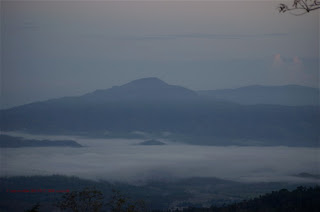
Waterfront in the morning


Read More

Earth hour @ The Waterfront

Solar powered Consol Glass jars light up the Waterfront with a plea to save. Save what? The earth? Lights? Power? But these things, though necessary to respect and conserve, are just temporal and a blip in the greater scheme of things. So save! Save what? Save souls! For these are the only lights that have any permanence in this present-continuos existence!

Read More
Destiny is a lighthouse that will lead
you home!
What can I say about myself but, "I wanted to do this but did not!"
if I do not do what is in my heart to do?
what will the world say about me once I've come and gone
only having spoken about the desire burning in me?
what can be said of such a man?
"He was a good son, a reliable friend," or maybe "He was a good husband and father?"
perhaps the opposite is true and all he left was disappointment in his wake.

Who knows for certain what will be said and what will be silenced of such a man?
But one thing you can be sure of not being said by the man or about the man who did not follow his hearts cry is this:
"I/He fulfilled the good destiny that was purposed for me/him!"
For he himself will know the deafness carried in his soul
and the world will see it in the dispirited sheet covering his eyes
Destiny will not and can not be hid, whether fulfilled or not.
Read More

Eddie the Elephant


Eddie the Elephant lived a long time ago. Yet he could have been like any other living Elephant sharing  his same shameful fate.

Not long after Eddie was born, he was out in the woods learning to be an elephant.
"Push!" his mother was egging him on.
Eddie strained his whole body, till tears were squeezed out of his shut eyes, but the tree would not budge.
"He will be a mighty bull," his father thought, scooping another branch of leaves into his mouth with his trunk, pretending not to see his sons efforts.
"Come on Eddy, push!" his mother encouraged.
Eddy relented, rocking his weight back onto his hind legs, but just for a moment though. Putting all his might into the next movement, Eddy catapulted himself forward. With a mighty thud he crashed into the tree. All the leaves on the tree waved violently but even though Eddy still pushed against the tree with all his strength it would not budge. Little did Eddy know though that in the next moment his life would change forever.

The world erupted into a series of big bangs.
"Run Eddy!" he heard his mom shout at him above the noise.
But before he was even five steps into his run, he felt a searing pain in his hind quarters.
A couple of steps later, the bangs began to become ethereally distant and the trees looked even fuzzier than before. The last thing Eddy saw out of the corner of his eye was his mom dropping to the ground in a big heap.

Startled, Eddy woke. The first thing that came to his mind was his mom collapsing. Eddy frantically looked around. His mom was no where to be seen. Nor his dad. In fact Eddy didn't recognize anything about his surroundings. Eddy was all alone in a big circle of dirt. A large steel stake rose up out of the ground, a monument to the loneliness of that moment. A fence ran along the edge of the circle of dust and beyond the fence row after row of seats climbed up into the sky until a canvass heaven put a stop to their rise.

"Mom!" Eddy heard himself scream, his heart now pounding with angst. Eddy got up and began to run but a few steps later he was down in the dirt again. In no time Eddy was up again and on the run. But just as soon he was yanked back to the ground. That's when Eddy noticed the rope tied from his leg to the steel stake. Furious, Eddy got to his feet and with all the power he could muster, ran at the stake. Colliding into it, Eddy had supposed that he would knock it out of the ground. It was nothing in size compared to the trees he had knocked over before, nor anything compared to the trees he had lately been training to push over. To his surprise though it didn't even budge. Eddy tried again, and again. He ran into the stake from all different angles and pushed against it with all his might until he collapsed to the ground in a heap. Day after day, Eddy tried in vain to break free. Until one day he knew he would never be free from the stake. Tired, hungry and thirsty he sat down with a finality, Eddy resigned himself to the fact that he would always be tied to the rope and the stake.

 A while later some men came around and replaced the steel stake with a wooden stake. But Eddy knew he wouldn't be able to break free from the rope and the stake so he didn't even bother trying. As the days went by, a friendly man would come visit him. He would bring food and hose him down with cool water. He would speak softly to him and even rub him down, a great relief when he rubbed over itchy spots. Soon, memory of the life he had had in the woods began to fade. And although he didn't forget his parents, he forgot all that they were teaching him.

Many years later, Elly, because that's what they called Eddy now, was a big star in the circus. His master would speak and he would sit on his bum like a dog. The people who had come to watch him would laugh and clap. His master would speak again and he would stand up on three legs, his trunk extended and his whole body stiff as a rod, like a pointer dog in hunt. People would clap and clap. Elly enjoyed doing what he did. He knew the voice of his master, it was comforting to him. And he enjoyed the applause from the crowds. He was doing what he was meant to do. And sometimes, when a thought about going back to the woods and being a wild elephant again stole into his reality, Elly would immediately dismiss it as ridiculous. He was a circus elephant. Besides, he could never break free from the rope except when he was with his master.
Read More

The games God plays


A stippled line of birds concertinas
across the sky, an enormous person,
dressed in fluffy clothes, reclines against
Table Mountain then becomes a duck
someone's thrown a horde of zinc plates onto
the ocean's face, the glare's unbearable
a massive black head pops through the skin
takes a nibble of the air, the sun lolls
ever closer to Robyn Island as if
we do not know it never sleeps
the black head implodes on itself
disappears as if though it never was
and there, a plume of misty water appears

I'm waiting for the green flash I never
seem to see, clouds gather on the
horizon like a charging army
on a dusty battle field, which makes me think
that God is running across the universe
and if later on tonight I should happen
to see a shooting star
I'll know, that God was just playing marbles


Read More

di-BTRIM: The healing power of nature wrapped in a capsule.

Do you suffer from diabetes, high blood cholesterol or high blood pressure? Have you been from pillar to post trying all sorts of remedies but still suffer just as before? You will be interested to know then that scientists have uncovered the body's natural healing system.

In recent scientific tests, it has been noted that when a tissue or organ is damaged, diseased or otherwise stressed, it sends out a SOS which travels through the bloodstream to the bone marrow, the Adult Stem Cell(ASC) Factory. The bone marrow then releases ASC's which travel back to the needy tissue or organ where they morph into healthy cells of that specific organ or tissue, thus healing the body.

But if the Adult Stem Cells are the body's natural healer, why are so many people sick? One need look no further than the demands our modern lifestyles place upon our bodies to find the answer to that. The way most people live does not lend itself to a healthy body but rather an unhealthy one. Therefore, it stands to reason that if we could help our bodies produce more ASC's, we would be able to fight off disease and recuperate from illnesses and injuries much quicker.

The producers of di-BTRIM have taken this revelatory information and combined it with the 15 years of research they have conducted to ascertain the efficacy of various natural herbs against various specific diseases to produce a 100% organic and natural remedy in the fight against diabetes, gangrene associated with diabetes, high blood pressure and high blood cholesterol.

di-BTRIM therefore works in two very powerful ways; one, by helping the body to produce more Adult Stem Cells and two, through its carefully researched mix of ingredients, which are powerful on their own but become extraordinarily effective when combined in the perfect mix.

Not surprising then, patients who took di-BTRIM for diabetes, high blood pressure or cholesterol also noticed remarkable health improvements in other areas of their lives, notably improved general well being, better sleep and grey hair returning to its natural colour. Woman who had suffered painful periods for years said that their periods became painless and patients who were beset with migraines found relief.

An added benefit of di-BTRIM being a 100% natural and organic remedy is that no long term side effects were suffered by users. However, the fact that the ingredients in di-BTRIM are very powerful herbs, it is advised that patients consult their physicians first before taking a course of di-BTRIM. Pregnant, breast-feeding woman and children under 12 should not attempt to take di-BTRIM.


Read More

By God's grace


Like a dog chasing its short tail, the east the west.

I’m a fragrant bud, sin a bare twig.
Read More

A plant in His hands


You have washed my world

with the most violent winter.

I'm a plant of spring 

Read More

Reduction

Some moments reduce
the world and all her colours
to winter black-white
Read More

Review of Sweetwater Restaurant in Johor Bahru


REVIEW

Fillet of fresh sea bass on a bed of roasted sauteed vegetables with
a balsamic reduction.
The problem with eating at a restaurant that has an interesting menu is deciding what to have. Thankfully my wife and I were rescued by the hostess, who calmly recommended a couple of starters, mains and desserts. Her recommendations sounded delicious so we ordered our whole dinner there and then.

Not long afterwards the hostess, who turns out to be the owners partner, returned with a basket of hot breads straight out of the pizza oven. Soon after that a bottle of Durbanville Hills Cabernet Sauvignon was shown, opened and poured.

The restaurant itself is modern, trendy and airy. Different sections have definite feels about themselves. Walls are artfully decorated with huge portraits of interesting characters caught in intriguing poses. The kitchen is shiny, clean and open; a definite plus on my list: I like to know that the place my food is being prepared is clean and I enjoy watching the chefs at work, it adds a vibe.

Starters of grilled scallops set on a spinach Rockefeller with burnt orange vinaigrette and a calamari ripieni arrived. The scallops were delicious, the combination of scallops, spinach and the orange vinaigrette creating a very unique taste. Cindy's calamari ripieni in salsa di pomodoro all olio was equally delicious. The calamari tubes were stuffed with clams and a tomato salsa and I can't remember when last I had calamari that tender. Not having calamari, or any dish for that matter, crumbed, deep fried or spicy as hell, was a pleasurable change.

Cindy and I were able to soak up the atmosphere, chat and enjoy the very drinkable red wine while waiting for our mains to arrive. The table next to us was a family of four adults celebrating the moms birthday. There were a few tables of couples and other younger families in the main section
and in the bar lounge, hidden from view by the colourful glass bar shelves, a large table of bankers were celebrating something.

Cindy enjoyed a Spanish Paella for her main course. We were both impressed by the generous portions of large prawns, calamari and cubes of chicken mixed in with the perfectly cooked rice.
My duck was out of this world. The young rotisserie duckling was tender inside, crisp on the outside and the red cabbage, pear and orange sauce served with it was incredible.

The waiters serving us were efficient but lacking personality. In fact, I couldn't tell you who was meant to be serving our table, they did not introduce themselves, never once asked how we were doing or if we needed anything, they simply just dropped off food, cleared plates and poured wine. Stephanie, however, was a great hostess, popping around with each course to make sure we were enjoying our meal.

I'm glad that we ordered the chocolate-hazelnut souffle for dessert, for two reasons; it takes a while to prepare, allowing our food to settle and because it was to die for – bittersweet chocolate, nutty, moist and served with fresh whipped cream.

By the end of our meal the restaurant had quietened down considerably. The owner and executive chef, who had been busy in the kitchen up until then, went around to all the tables. He is a German named Hans. We had an after dinner drink and chat with him and he told us a few interesting stories of his experiences as a chef in hotels all around the world and of how he ended up in Johor Bahru.

Overall, our experience at Sweetwater Restaurant was very enjoyable.

The positives were:
  1. The restaurant is spacious, trendy and decorated sensuously.
  2. Suitable for lunches, dinners, business meetings, corporate functions, family occasions and romantic dinners.
  3. Hostess did a good job of making us feel welcome and had a thorough knowledge of the menu.
  4. Very good wine list.
  5. Basket of fresh, hot bread served on the house.
  6. The menu is extensive.
  7. Food was well presented, interesting and delicious.
  8. There is a waiting bar and bar lounge.
  9. Kitchen is open and the owner is the executive chef.
  10. The owner/chef went around to chat to the guests.
The negatives were:
  1. Mostly centered around the waiting staff; didn't introduce themselves, didn't know who was meant to be serving us, they didn't interact with customers at all.
  2. The upstairs section of the restaurant is not completed yet, so there is still blue sheets covering up parts of the wall.

Prices:(Given as an average between Cindy's meal and mine)

Starters RM24.00
Mains RM45.00
Desserts RM22.00

* Prices exclude government tax and service charge.


Read More

Leonie E Brown Re-invented


 Shortly after winning the prestigious Absa Atelier Award, Leonie E Brown disappeared from the art world. Now, after many years, she returns with a trademark touch of magic. 


won the National Volkskas Atelier Award for Fine Art in 1985. My university didn’t want me to enter, but John Botha, my Art History lecturer and Natascha Pretorius, a friend, believed in me when no one else did. They submitted two of my pieces. Both were accepted, and the one piece won,” the artist recounts.


But the rosy glow of the young artist’s unexpected victory was not to last. “The year after I won the Atelier Award was terrible,” says Brown. “I was filled with pain, loneliness and sadness. My work then was very harsh, angular and angry. I used a lot of cold colours and hard surfaces. Most of my work was done on hardboard.” 


The work Brown produced during this period allows the spectator to share in the emotional turmoil she was experiencing. “I employed texture to shock and repel, and a palette knife to scratch and unsettle the viewer. I recreated my misery in my work. It’s painful looking at yourself in a mirror during cold seasons. So I quit.”  

Her sojourn away from canvases lasted 14 years, leading her to many places she might never have visited had she continued as a solo artist. Some of these experiences include teaching art to high school students in Lichtenberg, working as a graphic designer in Cape Town, and living in what was then still known as Czechoslovakia. 


“Life was tough, but I was learning what varsity couldn’t teach me; who I am. All those different things I did taught me some invaluable lessons. Working as a graphic designer, for example, taught me how to work with finer details.” 


In 2000, the year before Brown got married, she found herself standing in front of a canvas once again. And when the work of art was completed, she stood back, startled by her creation. 
“It was as though I’d been reinvented. I realised that somewhere along the line, I had found inner peace. I wanted to share that with the world, but in a way that also allowed the viewer to see his own soul through my work. At first I was cautious, just brushing up on old skills,” she explains. But as her confidence rose, she began experimenting. “I believe good art is produced by artists who continually develop their technique, style and change their subject choice.” 


Not one to employ radical new media, Brown refers to herself as a traditionalist. “I won’t cut holes into a canvas, splash blood onto it and then stretch a dog skin over that. I enjoy working on a canvas using oil paints to create the picture I have in mind, and experimenting with different styles, techniques and tools.” 


Today, Brown has achieved acclaim for developing a style of painting that is recognisably her own. In one of her latest landscapes, aptly titled Coming Home, a rustic farm house stands in a field of golden grass. A muddy road runs parallel to it and off into the distance where a powerful mountain range guards the horizon. A pale blue sky holds soft white clouds in its expanse. Layers and layers of colour shine through each other to create an out of focus effect similar to pointillism. But unlike pointillism, Brown has managed to create a soft lace-like finish with very few hard edges. 

“When I started painting, I used brushes. My paintings had a flat finish. So I began experimenting with impasto. I fell in love with the textures created by applying oodles of paint. People wanted to touch my work because of it, so I started using a palette knife in conjunction with the brushes and an impasto technique to enhance the effect. Later on I only used palette knives.” 


But one day she became frustrated with the effects she was achieving. “I grabbed the closest thing to me. Let’s just call it my little secret,” she adds mischievously. “I tried that on the canvas and immediately saw the potential. Now I feel comfortable and confident working with my newfound tool. I only use a palette knife 
to create hard edges.” 

And while she still employs some of her former techniques, her new methods allow for more fluidity, and can be described as more expressionistic. 

Brown is rapidly building up a following in South Africa as well as Germany, and her work can be seen in top galleries in these countries. Her art can also be viewed on her website at www.lifeart.co.za. 


Read More

Know your honey, Honey


Their sting can kill or their spit heal; but while it’s uncommon for bees to destroy life, their possible extinction poses a far more potent poison to mankind.
And speaking of toxins, would it surprise you to know that many honey products could be just that?

I drove up into the mountains of Malaysia with Bruce Cheong, owner of the only Malaysian mobile bee farm, to see the bee rescue work he is involved
in. Standing on bare earth, my feet caked in red dust, their plight hit home. Bees buzzed all around us, the tree housing their hive had been felled and all that
remained was a two-by-one metre section of trunk.

“This colony will almost certainly die if we don’t rescue them,” Cheong said. “Loggers generally just burn them, their habitat has been destroyed and in this
heat…” he trailed off. I imagined the stench of delicate wings and hairy bodies burning. Above us, the big sky exploded in chunks of blue and bits of white. Kenny, Bruce’s business partner, gingerly approached the fallen hive and quickly stuck a wad of stiff paper into its opening. Hisyam Binimiskam, the Indonesian logger who had informed Kenny about the colony, helped carry it over to the waiting 4x4.

“You know,” Bruce continued, returning to the dirty vehicle, “bees are responsible for pollinating more than 70 percent of the world's vegetable and fruit crops,
which means that without them, the world would be in the clutches of starvation.”

Flowers secrete a sugary-sweet substance called nectar to attract insects. As bees fly from flower to flower collecting it, which they later make honey from,
pollen stick to their hairy legs. Normally yellow, this fine powdery substance discharged from the male part of the flower is carried to the next flower, where
some rub off. If it comes into contact with the female ovule, the flower is fertilised enabling the plant or tree to bear fruit.


But the value of bees doesn’t end with pollination. The honey, bee pollen and royal jelly they produce are packed with vitamins, minerals, enzymes and more,
and have been used for millennia by Egyptians, Greeks, Chinese and now, the modern world as a food source, for medicinal purposes and in cosmetics.

“They plan to flatten another 1,300 hectares of forest to plant palm oil trees,” Bruce exclaimed, pointing to the devastation, “but it’s not just deforestation
threatening bees. They’re hyper-sensitive creatures and the use of pesticides on crops and in gardens the world over are killing colonies at a time.”

“When logging,” Kenny said, “I saved many colonies; but when I became a full-time beekeeper, I knew I had to do something to save the forest bees, so I
offered the loggers a reward to call me instead of burning them.”

We picked up another four hives and then drove 40 kilometers back into Kenny’s village, past paddy fields and into a starfruit farm. “The paddy fields were once a beautiful forest too,” Bruce said, “but with the farmers came pesticides; two reasons we decided to start a mobile bee farm. Following the flowering seasons of natural forests helps ensure the bees’ survival.”

Stopping next to a flower-adorned tree, Kenny off-loaded a hive, propping it up, the hive’s entrance on top. He pulled the paper wad out and quickly got out of
the way. Frenetic bees rushed into their new world.

“Rescued colonies are brought here and once settled in their new environment, we build a box with a hole in the bottom, an entrance hole and a lid that can be lifted up,” said Bruce, “and then we place the hole over the entrance of the existing hive and nail it down. The bees are thus fooled into believing that the box is their home and so build a new hive there.”

“It took Kenny years to perfect his design. This way, we don’t have to saw the hive in half to harvest the honey like most people do,” Bruce said. Kenny lifted the lid and motioned for us to dip our finger into the honey. Comforted by the information that the bees were stingless, I duly complied.

Coursing over tongue, the honey was slightly bitter, slightly sweet and had a fragrance, which was simply extraordinary. Totally unlike the honey I was used to; which begged the question – why?

Back in Johor Bahru, I checked health stores and supermarkets to find out what was on offer. I was overwhelmed by the variety, which included “Pure raw honey,” “Pure honey,” “Honey,” “Creamed honey,” “Imported honey,” and more. Suspiciously though, what were labelled as identical products differed vastly in taste, colour and consistency from brand to brand.

I consulted Sheila Wong (not her real name), a honey producer who agreed to let me in on the dark side of the honey market. “Greed drives this industry
and people will stop at nothing to make a buck,” said Wong.

“To increase yields,” Wong said, “honey is harvested weeks prematurely and then heated to extract the excess moisture and prevent it from fermenting.
Exported honey is heated to preserve it and some businessmen feed their bees syrup instead of nectar,” she said, adding that these processes destroy honey’s healthy enzymes and vitamins, altering taste, aroma, colour and consistency.

More shocking was her assertion that people cook up honey according to recipes using only pots of sugar, colourants, flavourants and preservatives and bottle
and label it as “Pure Raw Honey.” “People get away with it,” she explained, “because the only industry standard is that the honey must be “safe” for consumption.”

“How does one know what you are buying then,” I asked. 

“You don’t really, but there are a few tests you can do,” she said. “When you rub real honey into your skin, because of the fructose, it becomes soft and is
easily absorbed. Doctored honey, however, is made of sucrose and is therefore thicker, and the more it’s rubbed, the stickier and coarser it becomes.”
According to Wong, processed honey will dry throats, make one thirsty and has a strong aroma, but a flat taste. The opposite is true of pure raw honey. Its
enzymes slake thirst, soothe sore throats and does not have much of an aroma, but has an incredible flavour that corresponds to the flower the bees fed on.

If the government is lobbied to regulate the industry and consumers insist on the real deal, refusing to pay for products incorrectly labelled,
change as a course must follow.

10 benefits of honey

1. Powerful immunity system builder
Honey’s anti-oxidant and anti-bacterial properties help improve digestion, thus keeping one healthy and aiding in the fight against disease.
For this benefit: Mix 1 tablespoon of raw honey with the juice of half a lemon in a cup of warm water. Drink daily before breakfast.

2. As an energy source
The glucose in honey is quickly absorbed for an immediate energy boost; the fructose is absorbed at a slower rate to provide a sustained energy source, which makes it ideal for
enhancing athletic performance.

3. Provides relief for sore throats
Its anti-microbial properties not only soothe sore throats but also kill certain infection-causing bacteria. 
Gargle with a mixture of two tablespoons of honey, four tablespoons of lemon juice and a pinch of salt.

4. In the fight against weight gain
Consumed with warm water, it helps digest fat stored in the body. Regular consumption of a honey and cinnamon, or honey and lemon drink, can result in weight and body fat loss.

5. Sleeplessness
A teaspoon of honey in a glass of warm milk before sleeping is calming and induces sleep.

6. Source of vitamins, minerals and enzymes
Taken in its raw natural state, honey is an excellent source of nutrition.

7. For hangovers
Honey is gentle on the stomach and contains fructose, which is known to speed up the oxidation of alcohol by the liver, acting as a sobering agent. 
Try this: 50 ml of liquid honey, 80 ml of fresh orange juice and 70 ml of natural yoghurt blended together.

8. Hair care
Apply raw honey with a bit of olive oil to dry or damp hair half an hour before washing.

9. Wound management
Honey is hygroscopic. Its anti-bacterial properties prevent infection and function as anti-inflammatory agents, reducing swelling, pain and even scarring.

10. Replacement for sweeteners
The amount of harmful ingredients in sweeteners makes pure raw honey a natural alternative.

▶ Bee products include honey, bee pollen and royal jelly, but dont go chasing after them. Leave it to the experts!


Read More

Timor Leste'


Timor Leste' has got to be one of the most beautiful countries in the world.
Check out Cindy's photos

http://www.flickr.com/photos/cindy_gayle_wittstock/sets/72157625063052791/

and mine to see what I mean.

http://www.flickr.com/photos/wittstockmedia/sets/72157624965497817/
Read More

Playground


The earth is not hung by thread, nor stars

by rope or yet the sun by chains

they are not swung around by angels

like a little girl by her daddy

turning on his heels, they're hung by the word

of The Spirit, set in motion by the breath

of The Son and held together by the love

of The Father, who created the universe

as a playground for His children.

Read More

Creator Jesus


The grass is green, fields alive, mountains

stand and trees weep with morning dew

because of Your great goodness to mankind

Read More

PETRONAS TWIN TOWERS


The second tallest building in the world, the Petronas Towers in Kuala Lumpur, Malaysia.
Read More

A DIFFERENT TIME

A DIFFERENT TIME

The eight-thirty train from Boksburg to Johannesburg was unusually empty. If I had paused to think about that, I would never have boarded. But I hadn't! The only passenger in the carriage, I lounged in the blue vinyl seats, my knees propped up against the back board of the one in front of me, my backpack sprawled across the rest of the three seater.

The dreary industrial areas passed me by. Towers of rust, concrete boxes and little fingers of shiny metal pierced the sky. Plumes of dirty grey and sepia tried in vain to hide their heinous acts. An old mine dump, like a muddy crater, broke the scenery and for a second my senses flared; but all too soon it was relocated to memory, the insipid towers and steel once again stealing the show. I swallowed, my mouth was dry and I wasn't feeling well.

Minutes passed by. I looked at my watch. Ten past nine. I would be in Johannesburg soon. The train jolted, screeching as it began slowing down. Immediately I saw them, all the hairs on my body came to attention. Hundreds of people packed the approaching platform. They were jumping up and down, stabbing at the sky with sticks and spears and placards.

I peered out the window for as long as I dared. The men's torsos glistened with sweat, spear or stick in one hand and a fur shield in the other, little fur cloths covering their privates and wrapped around their ankles. Some faces were covered with white ash or cream. The women, most of them big and fat, some partially naked and others wrapped in colourful blankets, brandished placards. I managed to read one, despite the frenetic crowd: the word INKATHA was scribbled across the top in big, bold letters and beneath it was a picture of a black shield and two spears crossing in front of it.

'Zulus!' I said aloud, then thought, 'what're the chances? The country is about to explode into a bloodbath and I'm stuck in a riot!' Inkatha were the illegal political party representing mostly Zulu people. I glanced at my clothes, wishing my eyes would paint them a different colour, give them another cut, a different texture; but my boots, freshly boned, shone with pride, my trousers remained army issue and brown as did my shirt. 'A real life damn target! I should've gone to school a year earlier. I would've been finished with my National Service and not been in this predicament now.'

My heart racing, I moved away from the window, keeping low in my seat, my eyes fixed on the glass panes. 'My military training is paying dividends,' I thought cynically. I heard people running past, yelling, shouting. Bang! The train rocked as something smashed into it. 'Keep on moving,' I whispered, urging the train on, but it kept on slowing. 'The doors,' I thought aloud, 'don't open!' I grabbed my pack and slid it under the chair. I didn't want anything on me that they might want.

The night before seemed a thing of the distant past. Beer in hand, dancing with friends and strangers and people I'd never see again, the strobe lights illuminating and hiding smiles and faces, the music literally stirring within me, I felt invincible, like I forever belonged to the age I was.

The train came to a grinding halt. I wished that I had my rifle, but instead it was locked away in the barracks. The banging increased, the rocking became more violent. 'Is this it. My last stop?' I began thinking about a million different things; a thought waterfall: where were my parents, what were they doing? I hoped my sisters would forgive me for being a brat growing up, I had never loved before, was it too late, does God exist? On and on my mind roared.

I was crouching down on my haunches, meagrely protected by the seat. I raised myself up, ever so slightly, to be able to see out the window. A Zulu warrior came running towards my carriage, his face rock hard with anger. He wound up, screaming a hellish "Aaaaaaaghhh!" as he unleashed his knob-kierie, a fighting stick with a solid round ball at the end, on the carriage. I ducked, waiting for the explosion of glass. A hollow sound rang out as wood sank into metal. I adjusted my position behind the chair, trying to make myself smaller than possible. I waited for the next strike. This time glass would surely shatter.

Seconds like minutes passed. The thunder of hundreds of hysterical people soaked the sky, the carriage, the cave of my soul. I looked down the aisle. The doors were still closed and it seemed that the noise outside the window was growing quieter. It hit me. They were boarding third class. I was at the back of the first class carriages. That meant that my back was up against the interlinking door separating me from them. Prrrrt, I heard the conductor blow his whistle. There was a bit more thudding and swaying and then it fell silent. With a jolt, the train began moving. I slid across my chair on my knee. The platform was empty. 'They're all on the train,' I thought, 'hundreds of angry people!'

Very soon, the built-up landscape whizzed past. I looked around. Not another soul; but I'd known that, so I shook my head, berating myself for being wishful. On the far side of the carriage, another door beckoned me to step through its portal. However, I couldn't say for sure who or what was on the other side of that door, even though I knew it was a first class carriage. I decided to stay put, I knew what I was dealing with there.

"Viva!" someone cried behind me. And then again, this time louder, "Viva Inkatha!" and then more voices were thrown in, "Viva! Viva!" The chant grew louder. I had another look at that door on the far side. I imagined the chant snaking all the way down to the tail of the train. The word had come alive, the "V" a spear-head stabbing my heart every time it rung out. "Viva! Viva! Viva! Viva Inkatha, Viva!"

I pulled my beret out of its shoulder strap, unwrapped it, put it on my head and with a few expert strokes smoothed it into shape. I don't know why I did it, I just did. My back straightened and my jaw set. The train jerked. I fell backwards, just managing to catch onto the silver piping lining the seats. I glanced up at the door. It was still closed. The train was slowing down. I grabbed my bag from under the chair and walked towards the door in the middle of the carriage. The chant still rang out. Clueless, people milled about on the platform, an old lady, her back bent, lent on her rigid walking stick, a corporate man hid his face behind a newspaper. I feared for their lives. A sign indicated that we were in Johannesburg. I stood in front of the door, adjusted my straps and waited, ready to run.

But before the train had even come to rest, the mob was on the platform, speeding across it, gouging the sky's womb out and screaming, "Viva! Viva!" The corporate man lowered his paper, then dropped it, running before it hit the ground. Everyone was screaming and running but the old lady. She was as ridged as her stick now.

Out of nowhere, some man snatched her up. Her stick fell to the ground. Too late to head for the exit, he headed for the train on the opposite side of the platform, the old lady safely in his arms. The train I was on stopped. I drew in a deep breath. The mob flooded the platform. The man and old lady disappeared behind the closing doors of the other train and then they were gone. An inspector tried to stop the mob to check their tickets but it was a losing battle. They surged past him and scrambled up the flight of narrow stairs. This caused a bottleneck and the tide was stemmed; but the jumping and chanting became all the more vigorous.

The door to my carriage opened. If I reached out I'd touch someone. I stepped back and waited, watching, as face after face passed me like a train of ghosts in a dream. In that moment I felt what I thought was hatred, in reality it was the fear of the unknown, the fear of death that had gripped me. A woman caught my eye as she moved past, leering at me. Something overcame me then; I can't explain it any other way other than a squaring up. I stepped out into the thinning river, my fists clenched, and I walked as a man with the right to be where he was, pushing through the throngs as I went.


Read More
 
Words and Images | by WITTSTOCKMEDIA ©2012